STEP 01
The opening is measured
Width and height of the opening, headroom above it, side room on both sides, and backroom along the ceiling. Headroom decides whether a standard torsion setup fits.
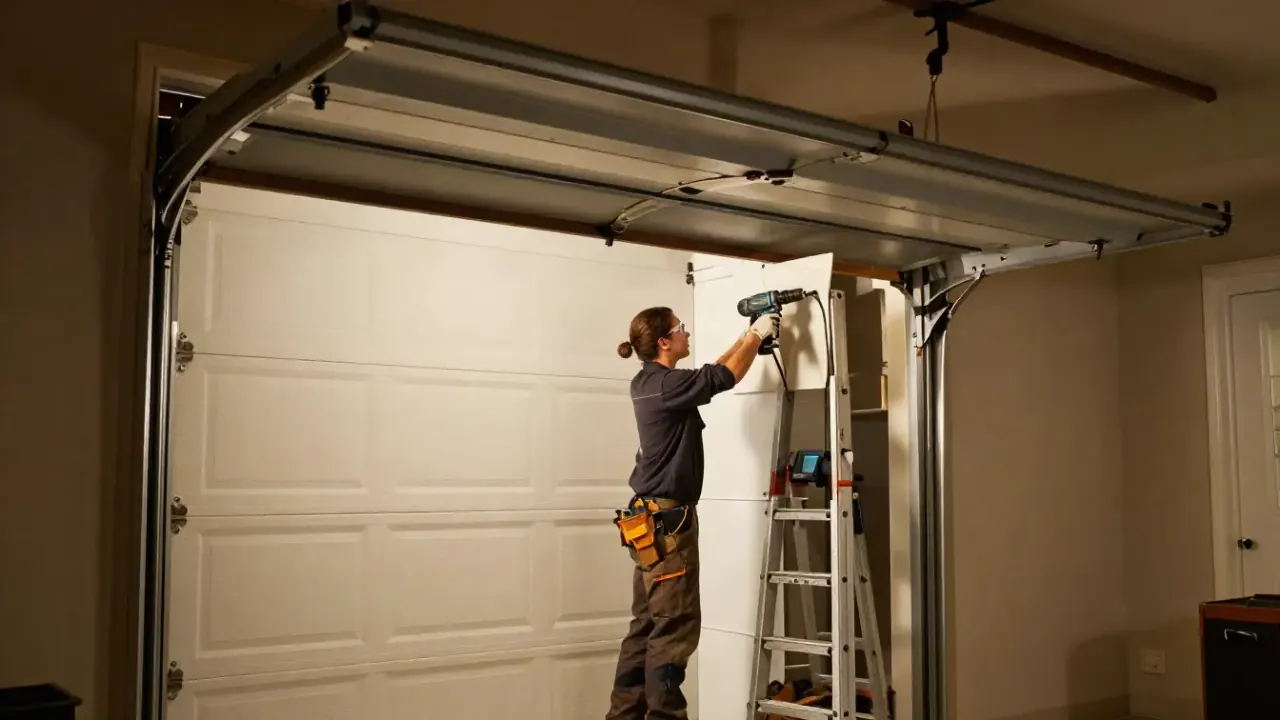
New garage doors
Insulated steel, carriage house and wide double doors, measured and fitted with springs sized to the finished weight. Old door hauled away. Singles run $900 to $2,500, doubles $1,400 to $4,000.
Who it is for
Most garage doors are worth repairing. Springs, cables, rollers, hinges and openers are all replaceable parts, and a twenty year old door with straight panels usually has years left in it. We will say so when that is the case.
Four situations genuinely call for a new door. Panels cracked or rusted through cannot be made sound. A door hit by a vehicle usually has bent stiles, and a bent stile will not hold hardware. A wood door that has delaminated in Kennewick heat is past patching. And a single-skin door on a garage you now use as a workshop will never hold temperature.
If none of those apply, the repair page is the cheaper answer and we will point you there instead.
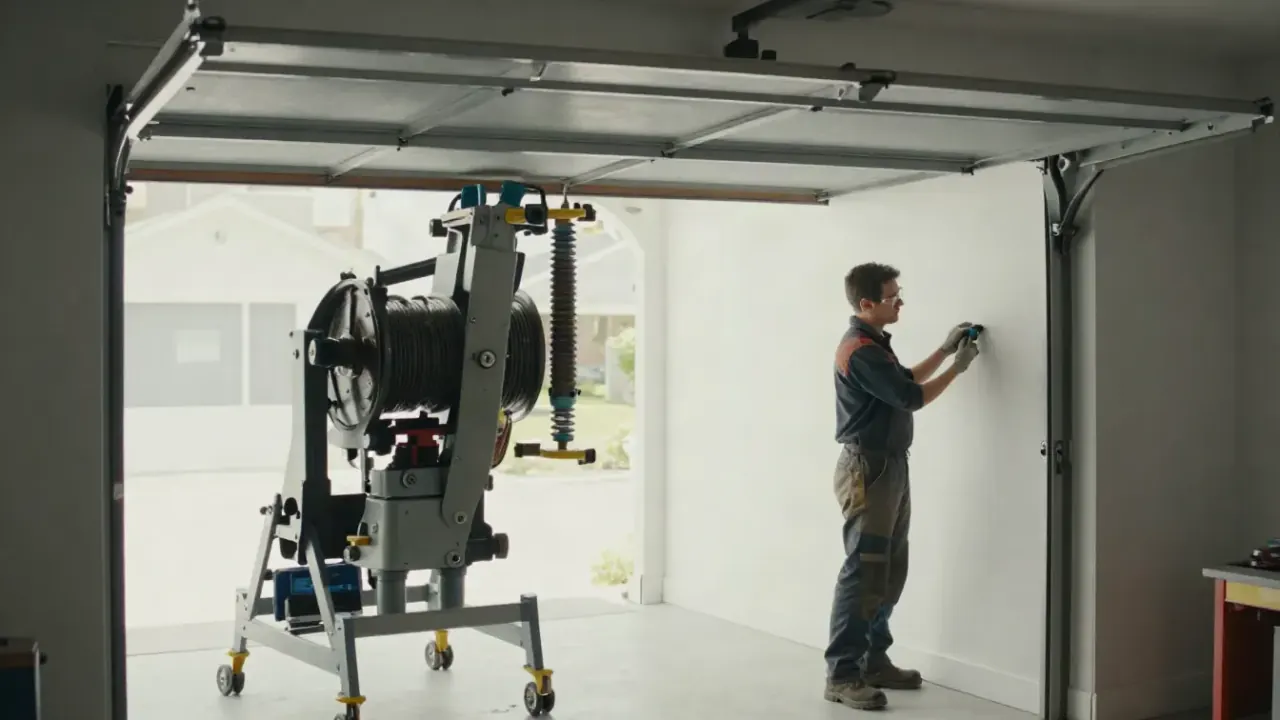
Our process
Measuring happens before the quote, not on the day.
STEP 01
Width and height of the opening, headroom above it, side room on both sides, and backroom along the ceiling. Headroom decides whether a standard torsion setup fits.
STEP 02
One figure covering the door, track, springs, rollers, hardware, labor and removal of the old door. No line items appearing later.
STEP 03
Panels come off, springs are unwound under control, and the old track and brackets come down. Everything is hauled away.
STEP 04
Vertical track plumbed to the jamb, horizontal track levelled and supported off the ceiling. A door only runs properly on track that is square.
STEP 05
Wire size, inside diameter, length and wind direction are calculated from the actual weight of the door, including any window sections.
STEP 06
The door is lifted halfway by hand, the opener travel and force are set, and the photo eyes are blocked to prove the reverse.
Issues we resolve
Five reasons people replace rather than repair.
Once a panel has rusted through or cracked across a stile, the structure is gone. Patching a panel on a moving door does not hold.
A vehicle strike bends stiles and hinges. Hardware will not sit square on a bent stile, so the door never runs right again.
A single-skin door makes the garage unusable in a Kennewick August and heats the wall it shares with the house. A polyurethane core sits at R-12 to R-18.
A door that no longer sits level leaves a gap at the bottom. New weatherseal and a square door together keep farm dust out.
When springs, cables, rollers and hinges have all been replaced on a twenty year old door, a new door with new hardware is often the better spend.
Benefits
Four things a new door changes immediately.
An insulated door with a polyurethane core keeps the worst of the heat out. On an attached garage it also stops that heat reaching the house wall.
New rollers, new hinges and a door that runs square make far less noise than an old single-skin door with worn hardware, which matters on a garage under a bedroom.
New bottom seal and jamb weatherseal on a square door is what actually keeps grit and heat out, more than anything you can do to an old door.
New springs rated at a known cycle count, new cables, new rollers. You know roughly when the first service is due instead of guessing.
Why choose us
Most of what goes wrong with a new door is fitting, not the door.
If the panels are sound, a new door is money you do not need to spend. We say that before quoting, because a repair is a smaller job for us and the right answer for you.
Wire size, diameter, length and wind are calculated from the real weight, windows included. A door fitted with near-enough springs never balances properly.
On older Kennewick and Richland houses the framing has usually moved. Track bolted to an out-of-plumb jamb pulls the door sideways from day one.
The old door, track and hardware are taken away as part of the job, not quoted separately afterwards.
Good to know
Four decisions that set the price.
A single door is roughly 8 or 9 feet wide and a double runs 16 to 18. The double needs heavier springs and more hardware, which is most of the price difference.
Single-skin has almost none. A polystyrene core sits around R-6 to R-9. A polyurethane core runs R-12 to R-18 and is the one worth paying for in this climate.
Insulated steel suits the dry heat here and needs no refinishing. Wood and composite look better on older homes but want maintenance.
Flush, raised panel, carriage house or a glass top section. Windows add cost and change the door weight, which changes the spring sizing.
Reviews
Nothing here is a real review yet.
PLACEHOLDER: replace with a real review before launch
Customer review 1 goes here.
PLACEHOLDER: replace with a real review before launch
Customer review 2 goes here.
PLACEHOLDER: replace with a real review before launch
Customer review 3 goes here.
This block is a layout placeholder. No review markup is published and no rating is claimed until real, verifiable reviews are supplied.
Pricing
A new garage door installed in Kennewick runs $900 to $2,500 for a single door and $1,400 to $4,000 for a double, including the door, track, springs, rollers, hardware, labor and removal of the old door. Basic single-skin steel sits at the bottom of those ranges, and insulated polyurethane, carriage house styles and glass sections at the top.
Width is the biggest single factor, because a wider door is heavier and needs more of everything. Insulation is second, and a polyurethane core typically adds a few hundred dollars over polystyrene. Windows, decorative hardware and custom colors come after that.
A new opener is a separate item at $400 to $700 fitted. Keeping a working opener is usually fine, as long as it has the strength for the heavier insulated door and has working photo eyes. Call (509) 204-4058 with your opening width, your headroom and whether you want insulation, and you will get a real range on the phone.
A new door does not change how it gets looked after. The same yearly garage door maintenance visit applies, and garage door spring repair comes round again once the new springs reach their cycle count. The full list is on the Uplift Garage Doors services page, the towns are under Uplift Garage Doors service areas, and Uplift Garage Doors quotes both.
Service areas
Same prices in all four towns, with no travel charge.
Farm dust in the track and shift-work doors running six or more cycles a day.
View area 02Low-headroom 1943 Alphabet House garages and wide insulated doors in the south.
View area 03Builder-grade springs and openers reaching their cycle limit street by street.
View area 04The main service area, covering springs, cables, openers and off-track doors.
View service areaGood questions
A single door installed runs $900 to $2,500 and a double runs $1,400 to $4,000, including the door, hardware, springs, labor and removal of the old door. Width and insulation drive most of the difference. A new opener fitted is a separate $400 to $700.
Most take between four and eight hours, so one working day. Removing the old door and unwinding its springs takes about an hour of that. A non-standard opening, a low-headroom kit or a second door adds time.
On an attached garage it usually is. Summer afternoons run past 95 degrees and the garage heats the wall it shares with the house. A polyurethane core door at R-12 to R-18 makes a measurable difference and is noticeably quieter than single-skin.
Often yes. It needs enough strength for the new door's weight and working photo eyes. An insulated door is heavier than the single-skin door it replaces, so the force settings get redone either way. If the opener is already noisy or slow, fitting it to a new door is a false saving.
Yes. Removal and disposal of the old door, track and hardware is part of the installation price, not an extra line on the bill.
Opening width and height, headroom above the opening, side room on both sides, and backroom along the ceiling. Headroom matters most, because it decides whether a standard torsion setup fits or a low-clearance kit is needed.
Give us your opening width and whether you want insulation, and you get a range on the phone before anybody measures. Call (509) 204-4058.