STEP 01
Door balance
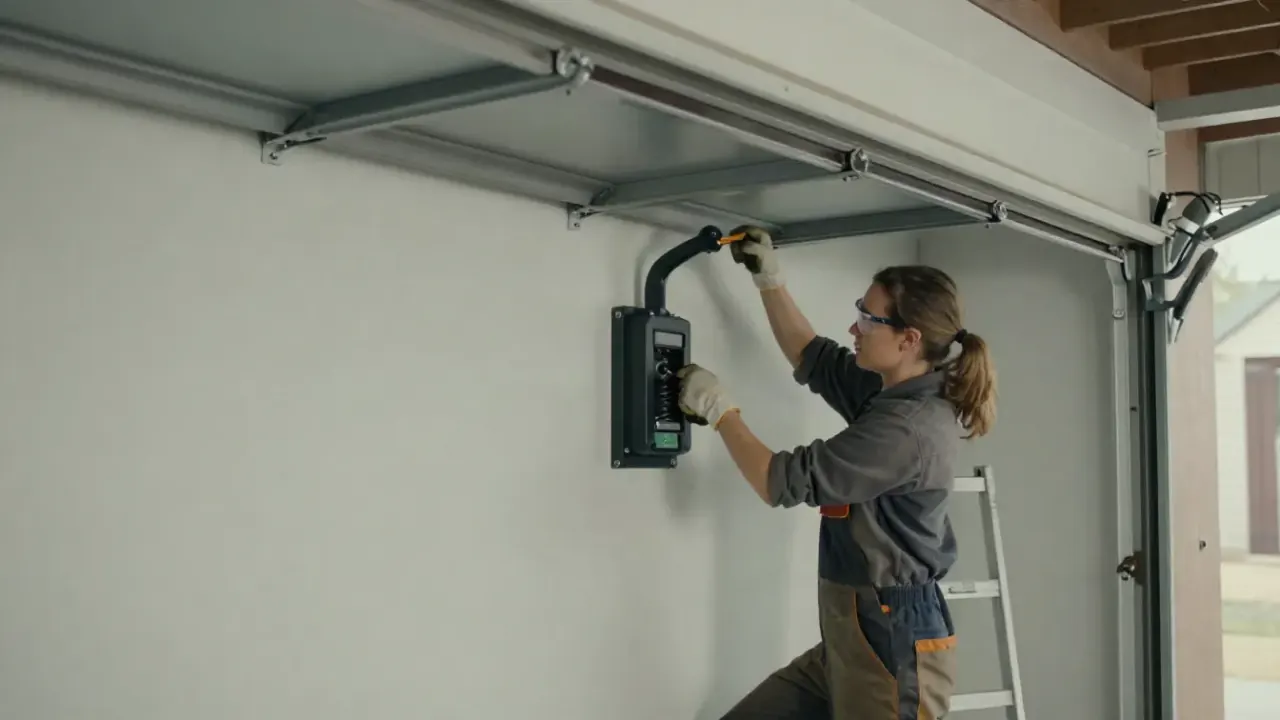
The opener is unplugged and the door lifted by hand. A balanced door stays where you leave it. If it drops or climbs, spring tension is adjusted.
Tune-ups and safety checks
A tune-up runs $100 to $250 and is the only garage door visit meant to stop a failure instead of fixing one. Eleven checks, including both safety tests.
Who it is for
A tune-up suits any door that still works. That is the point of it. Once a spring has snapped or a cable has frayed through, the visit is a repair and it costs two to four times as much.
Book one if the door has started grinding or popping, if it has never been serviced, if it sits on a detached shop where more dust gets into the track, or if the household opens it six or more times a day.
A tune-up is also the sensible first visit on a house you have just moved into, because it tells you how much life the existing springs have left instead of leaving you to find out on a cold morning.
Our process
Eleven checks, and two of them are safety systems most people have never seen tested.
STEP 01
The opener is unplugged and the door lifted by hand. A balanced door stays where you leave it. If it drops or climbs, spring tension is adjusted.
STEP 02
Springs are checked for gaps and rust, and their remaining cycle life is estimated from the door's age and daily use. Cables are inspected along their length, especially at the drum.
STEP 03
Rollers are spun by hand for flat spots and seized bearings. Every hinge and bracket bolt is checked, because vibration works them loose.
STEP 04
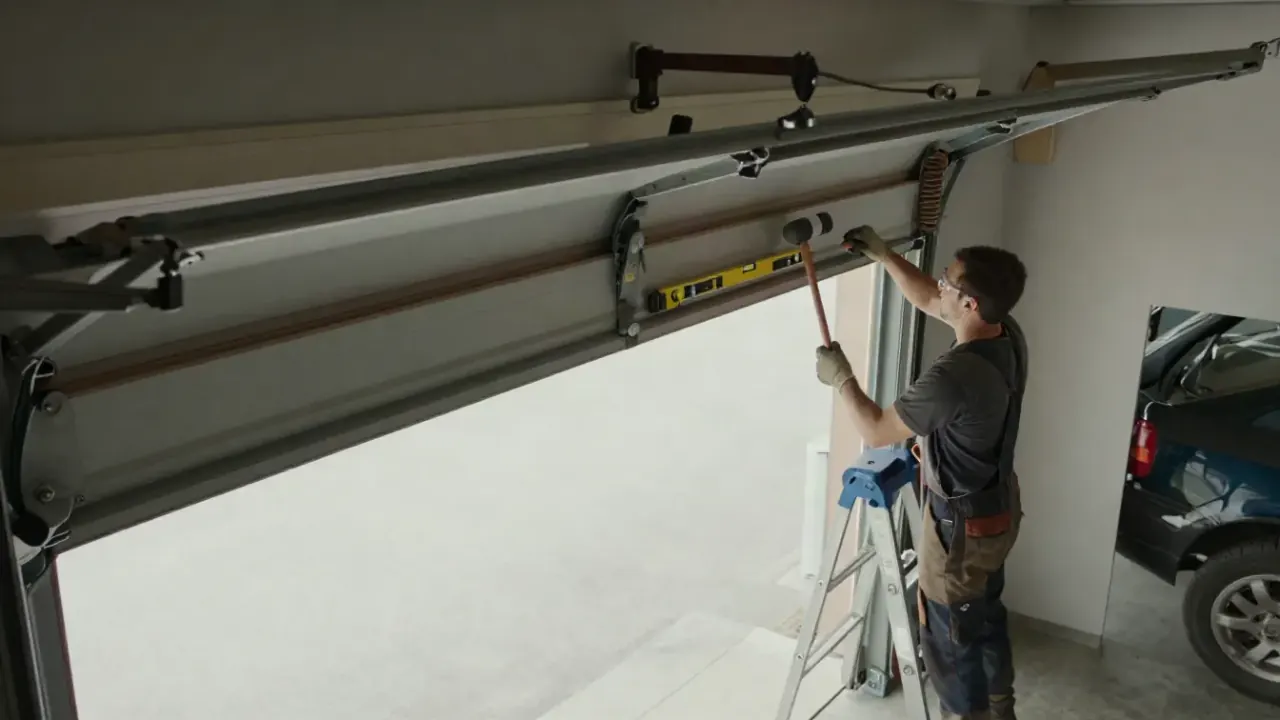
Vertical track checked for plumb, horizontal for level and support. Grit is cleared out of the bottom of the channel, which is where most roller wear starts here.
STEP 05
Rollers, hinges, bearings, springs and the opener rail get a light lithium or silicone lubricant. Never grease on the track itself, because grease collects grit.
STEP 06
Photo eyes aligned and the beam broken on purpose while the door closes. Then a flat board under the door: a correctly set door touches it, stops and reopens.
Issues we resolve
Five failures that are cheap now and expensive later.
Loose strands at the drum are visible long before the cable snaps. Caught now it is $120 to $220. Caught after it breaks it usually comes with a re-rail.
Estimated life means you can plan the replacement instead of discovering it on a work morning with the car inside.
Dry heat and grit flatten rollers and seize bearings. A set is $100 to $200 and stops the dragging that wears springs early.
Vibration backs off hinge and bracket bolts. Loose hardware lets panels flex, and flexing panels crack stiles, which is panel replacement.
A door that does not reverse on contact is the one fault that actually hurts somebody. It is tested on every visit.
Benefits
Four returns on the cheapest visit on the list.
A spring is rated for cycles on a door that moves freely. A dragging door makes it work harder every cycle, so it falls short. A balanced, lubricated door reaches the number on the label.
Most garage door noise is dry rollers, dry hinges and loose hardware. Those are exactly what a tune-up addresses, and the difference is usually immediate.
Openers fail from lifting unbalanced doors. Keeping the door balanced is the single best thing you can do for the opener.
Photo eyes and reverse on contact proved in front of you, not assumed. On a door a family walks under every day, that is worth the visit on its own.
Why choose us
A tune-up is easy to do badly, because nobody checks.
Balance, springs, cables, rollers, bearings, hinges, fasteners, track, lubrication, photo eyes and reverse on contact. The same list on every visit, not a spray of oil and a wave.
Anything found gets priced and you decide. Nothing extra happens during a tune-up without you agreeing to it first.
You are told roughly how long the springs have left, based on door age and daily use. That lets you plan rather than be surprised.
Most of the cost of a repair is in the setup. Replacing rollers or cables while the door is already clamped costs far less than a separate call-out.
Good to know
Three jobs that need no tools and no spring tension.
Grit in the channel is what wears rollers and makes the door drag. A broom once a month does more for a Kennewick door than any spray.
Lay a flat board under the door and close it. The door should touch the board, stop and reopen. If it does not, stop using the opener and call.
Those are the months doors change here. Dry heat strips lubricant through summer, so a door quiet in spring often announces itself by late August.
Reviews
Nothing here is a real review yet.
PLACEHOLDER: replace with a real review before launch
Customer review 1 goes here.
PLACEHOLDER: replace with a real review before launch
Customer review 2 goes here.
PLACEHOLDER: replace with a real review before launch
Customer review 3 goes here.
This block is a layout placeholder. No review markup is published and no rating is claimed until real, verifiable reviews are supplied.
Pricing
A garage door tune-up in Kennewick costs $100 to $250, which puts it well below any repair. The figure depends on door size, whether it is a single or a double, and whether the opener is included in the service.
Anything found during the visit is quoted separately and you decide. The common finds are a roller set at $100 to $200, a frayed cable pair at $120 to $220, and a worn bottom seal, which is a small part. Springs near the end of their cycle life get flagged with an estimate rather than replaced on the spot.
Doing a found repair during the same visit is normally much cheaper than a separate call-out, because most of the cost sits in the setup rather than the part. Call (509) 204-4058 to book, and say how old the door is and roughly how many times a day it runs. Those two numbers decide whether you want one visit a year or two.
Tune-ups are available in all four towns under Uplift Garage Doors service areas, and the full job list is on the Uplift Garage Doors services page. When a tune-up does find something, it is usually garage door cable repair or a garage door repair on the rollers. Uplift Garage Doors prices the find before touching it.
Service areas
Same rates in Kennewick, Pasco, Richland and West Richland.
Farm dust in the track and shift-work doors running six or more cycles a day.
View area 02Low-headroom 1943 Alphabet House garages and wide insulated doors in the south.
View area 03Builder-grade springs and openers reaching their cycle limit street by street.
View area 04The main service area, covering springs, cables, openers and off-track doors.
View service areaGood questions
A tune-up costs $100 to $250 depending on door size and whether the opener is included. It is the cheapest visit available and the only one meant to prevent a failure. Anything found is quoted separately before any extra work happens.
Once a year for a normal household. Twice a year for a door that runs six or more times a day, or a detached shop door where more dust reaches the track. Wear follows use rather than the calendar, so frequency matters more than the date.
Balance check, spring inspection with estimated cycle life, cable inspection, rollers and bearings, hinges and fasteners, track alignment and cleaning, lubrication of moving parts, photo eye alignment and beam test, reverse on contact test, travel limit and force settings, and a weatherseal check.
Usually, and often straight away. Most noise comes from dry rollers, dry hinges and loose hardware, which is exactly what a tune-up addresses. Noise that remains usually points to flat-spotted rollers or a worn opener trolley, both inexpensive parts.
It stops them being wasted. A spring is rated for cycles on a door that moves freely. A door dragging on gritty rollers makes it work harder on every cycle, so it falls short of the rating. A balanced, lubricated door reaches it.
Some of it safely. Sweeping the bottom track, lubricating rollers and hinges with a light silicone or lithium spray, and testing the reverse with a flat board are all fine. Spring tension, cables and cable drums are not, because those carry the full weight of the door.
Tell us how old the door is and how often it runs, and we will say whether it needs one visit a year or two. Call (509) 204-4058.